


CLEANING AND SANITIZING WOODEN BARRELS WITH STEAM
Test carried out to verify the sanitization efficiency in wooden barrels
GENERAL OVERVIEW
CASE STUDY
CONDUCT OF THE TESTS
Idreta is ideal for cleaning encrustations, animal deposits, black patinas, graffiti, and porous surfaces. Here are some application examples:
MICROBIOLOGICAL DATA SYNTHESIS
TEST RESULTS
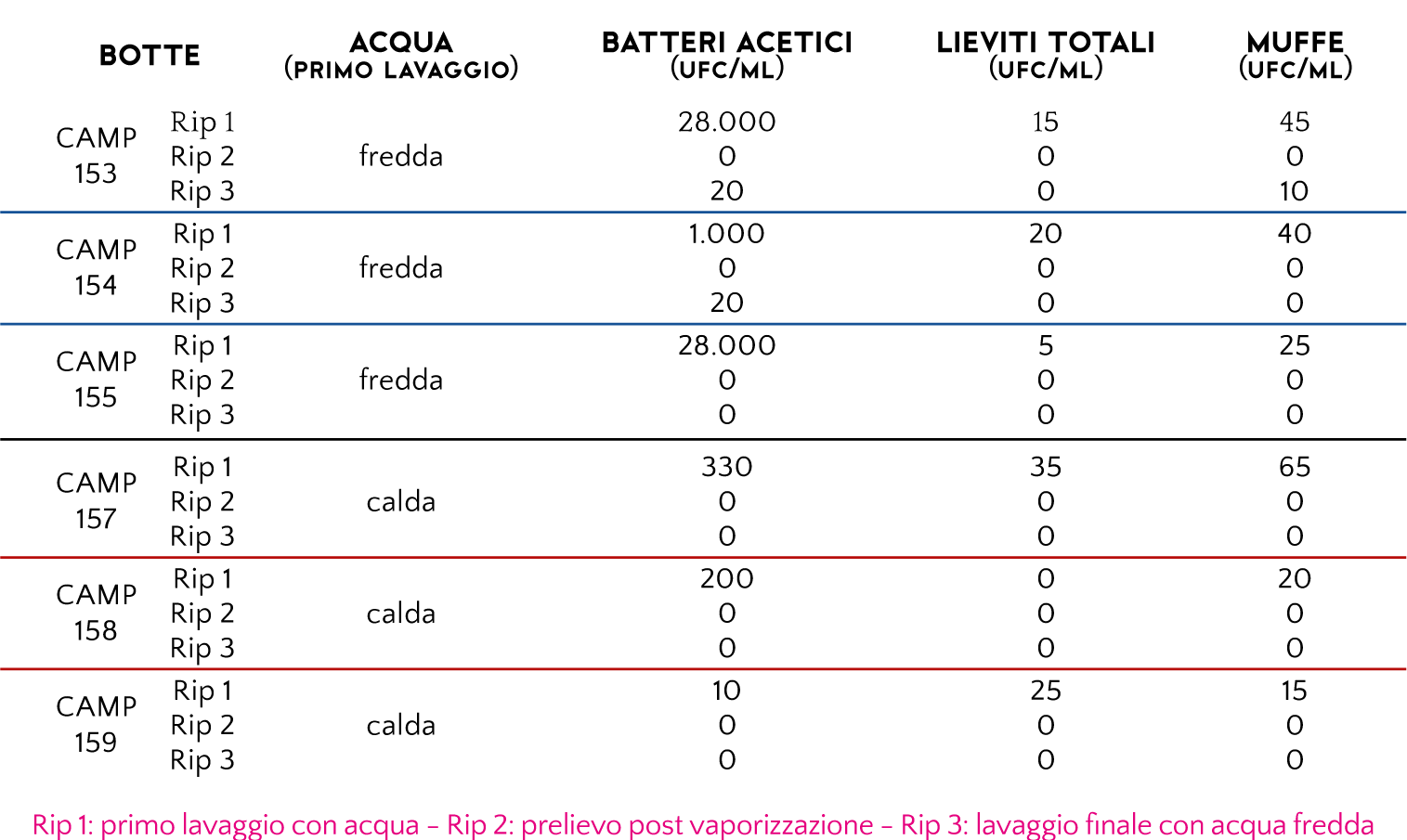
After the first microbiological determination (Step 1 – Rip 1) in all barrels there is a presence of acetic bacteria, total yeasts and molds in concentrations ranging from 15 to 28,000 cfu/ml (colony-forming units per ml) of aqueous sample.
As demonstrated by the second step (Rip 2), this presence is cancelled out by the specific steam treatment with the IdroEletrika method, with a significant difference between the rinses previously made with cold water and hot water, where the latter were decidedly more effective given that the isolated microbial population is lower by at least 1 logarithmic unit (10 times lower).
In all cases, the steam treatment allowed an effective sanitization of the barrels, considering the fact that in the next two samples it was no longer possible to isolate any microbial form, except for some colonies of mold probably due to environmental contamination without oenological significance.
CONCLUSIONS
The cleaning and sanitizing treatment carried out with the ECOpower professional pressure washer and the vaporONE industrial steam generator appears to be very effective in the experimental conditions tested and in sanitizing barrels and barrels for oenological use.
Electric pressure washers can also be used in workshops and by spare parts dealers to clean equipment, components and vehicle parts. Thanks to their power and versatility, they allow you to achieve professional cleaning results and ensure better maintenance of your vehicles. Furthermore, it is known from the scientific bibliography that the thermal resistance of oenological microorganisms is modest and uniform; therefore, the treatment proposed by IdroEletrika is also effective against the microbial forms not isolated in these tests.
Thanks to: Raffaele Guzzoni PhD – Technology Transfer Center – Edmund Mach Foundation – Agricultural Institute of San Michele all'Adige (TN).